
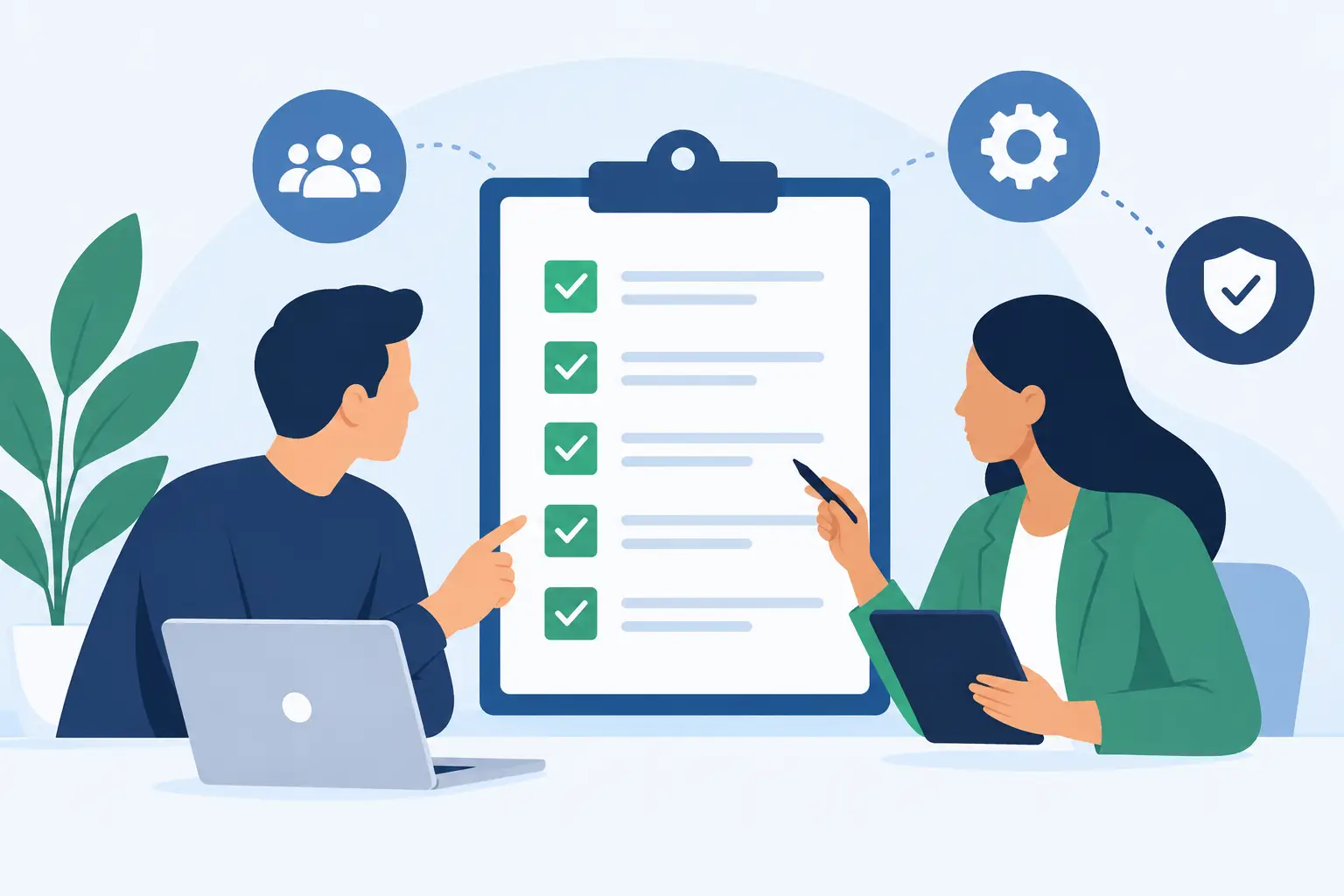
A software development partner review should begin before you compare hourly rates, scan portfolios, or schedule a technical call. The real decision is whether a team can turn a business objective into a product that works reliably, fits your operations, and continues to support growth after launch. A polished demo is useful. Clear ownership, sound architecture, and disciplined delivery are what protect your investment.
For startups, SMBs, and enterprise teams without a complete in-house engineering department, the right partner can accelerate market entry and reduce operational friction. The wrong one can create a costly dependency, leave undocumented code behind, or deliver an application that cannot scale beyond its first users. Use this review to assess the partnership, not just the proposal.
Start With the Business Problem, Not the Feature List
A capable development team should ask direct questions about the commercial goal behind the project. Are you reducing manual work with AI automation? Replacing disconnected systems? Launching an MVP to validate demand? Improving customer engagement through a mobile app or conversational AI?
If a prospective partner moves immediately into screens, features, and development estimates without clarifying the business case, pause. Features are only useful when they support a measurable outcome. The team should help define what success looks like, whether that is shorter processing time, more qualified leads, higher retention, lower support volume, or faster internal approvals.
This does not mean every project needs months of discovery. A focused MVP may require a practical, fast-moving plan. An enterprise platform handling sensitive data may require deeper analysis, stakeholder alignment, and technical validation. The appropriate level of planning depends on the risk, complexity, and consequences of getting it wrong.
What to Check in a Software Development Partner Review
The strongest software development partner review looks beyond visual design and programming languages. You are evaluating how the team thinks, communicates, builds, tests, and stays accountable when priorities change.
Strategic and technical ownership
Look for a partner that can explain recommendations in business language. They should be able to describe why a native mobile application, cross-platform framework, web platform, custom integration, or AI workflow is appropriate for your goals.
Ask how they make architecture decisions. A credible answer should cover expected users, data flows, third-party services, security needs, future integrations, performance expectations, and maintenance requirements. Be cautious if every client receives the same technology recommendation. A Flutter app can be the right choice for speed and shared code, but native iOS or Android development may be better when device-specific performance or advanced platform features are central to the product.
Technical ownership also includes documentation. Your business should understand where source code is stored, who controls the cloud accounts, how credentials are managed, and what happens if your internal team or another provider needs to take over later. Ownership should never be ambiguous.
A delivery process you can see
Software projects rarely fail because a team skipped a single coding task. They fail because requirements drift quietly, feedback arrives too late, risks remain hidden, or no one owns a decision.
Ask the partner to walk you through its delivery process from discovery through maintenance. A structured process should show when strategy is confirmed, when UX and technical planning occur, how development is organized, when testing happens, how feedback is incorporated, and who approves release readiness.
You do not need daily meetings to stay informed. You do need a predictable communication rhythm, accessible project visibility, and clear milestones. The best teams raise concerns early. If a requested feature adds significant cost, increases security exposure, or delays launch, you should hear that before the work is underway, not after the budget is exhausted.
Quality assurance and release discipline
A functioning feature is not automatically production-ready. Ask how the team tests across devices, browsers, user roles, integrations, and edge cases. For applications that process payments, health information, customer records, or operational data, testing should also account for permissions, errors, data validation, and recovery paths.
Release planning matters just as much. A development partner should have a clear approach for staging environments, code review, version control, backups, monitoring, and rollback procedures. Not every project requires enterprise-level infrastructure from day one, but every launch needs a responsible plan for when something fails.
Security should be part of the build process rather than a late-stage add-on. Discuss access controls, encryption, dependency management, API protection, data retention, and incident response in terms relevant to your product. A partner does not need to create fear to demonstrate security maturity. They should explain the real risks and the controls that fit your use case.
Transparent pricing and scope control
The lowest estimate often becomes the most expensive option when it excludes discovery, testing, deployment, project management, revisions, or post-launch fixes. A useful proposal defines what is included, what assumptions affect the estimate, and how change requests are handled.
Fixed-price engagements can work well when requirements are mature and scope is clearly defined. Time-and-materials arrangements can be a better fit when building an MVP, modernizing a legacy system, or exploring AI capabilities where learning during development is expected. Neither model is universally better. What matters is whether the commercial structure makes trade-offs visible.
Ask for clarity around payment milestones, acceptance criteria, third-party costs, hosting, licenses, and ongoing support. A trustworthy partner will distinguish between the cost to launch and the cost to operate. That distinction helps you plan responsibly instead of treating deployment as the finish line.
Evaluate the Team You Will Actually Work With
A sales conversation may include senior strategists and technical leaders, while delivery is assigned to people you have never met. Ask who will manage the project, lead engineering decisions, handle design, conduct quality assurance, and communicate updates.
You do not need biographies for every contributor. You do need confidence that the delivery team has relevant experience and stable leadership. If your project involves integrating with a CRM, building a marketplace, automating operations, or migrating a legacy platform, ask for examples of similar technical challenges and how the team resolved them.
References can be especially revealing when you ask about communication during difficult moments. Did the partner identify risks early? Did it handle changing priorities professionally? Was the delivered product maintainable after launch? A portfolio shows what a company has made. Client feedback often reveals how it works.
Test Collaboration Before You Sign
The proposal stage is a preview of the working relationship. Notice whether the team responds thoughtfully, documents assumptions, and makes complex decisions easier to understand. You should feel informed, not pressured into agreeing with technical recommendations you cannot evaluate.
A strong partner will also expect participation from your side. You may need to provide timely feedback, appoint a decision-maker, supply content or access to systems, and clarify internal policies. Successful software delivery is collaborative, but collaboration should not mean that you are left to manage technical details alone.
Before signing, agree on how decisions will be made when trade-offs arise. For example, if a feature is valuable but threatens the launch date, who decides whether to defer it? If a third-party API changes its pricing or availability, what is the contingency plan? These conversations create alignment when the stakes are still low.
Plan for the Product After Launch
Launching an application is the start of its operating life. Users will reveal friction that was not visible in testing. Operating systems, browsers, regulations, integrations, and customer expectations will change. Your partner should be prepared to support monitoring, maintenance, improvements, and growth planning.
This is particularly important for AI-enabled systems. Models, prompts, source data, workflows, and user behavior need ongoing review. An automation that saves ten hours a week at launch may need refinement as your process changes. The goal is not simply to deploy technology, but to keep it producing measurable value.
At SolidAppMaker, this long-term view shapes the work from strategy and architecture through launch, optimization, and continuing support. The right development partner should give your team the same confidence: a clear path forward, honest guidance when decisions are difficult, and technology that keeps pace with the business you are building.