
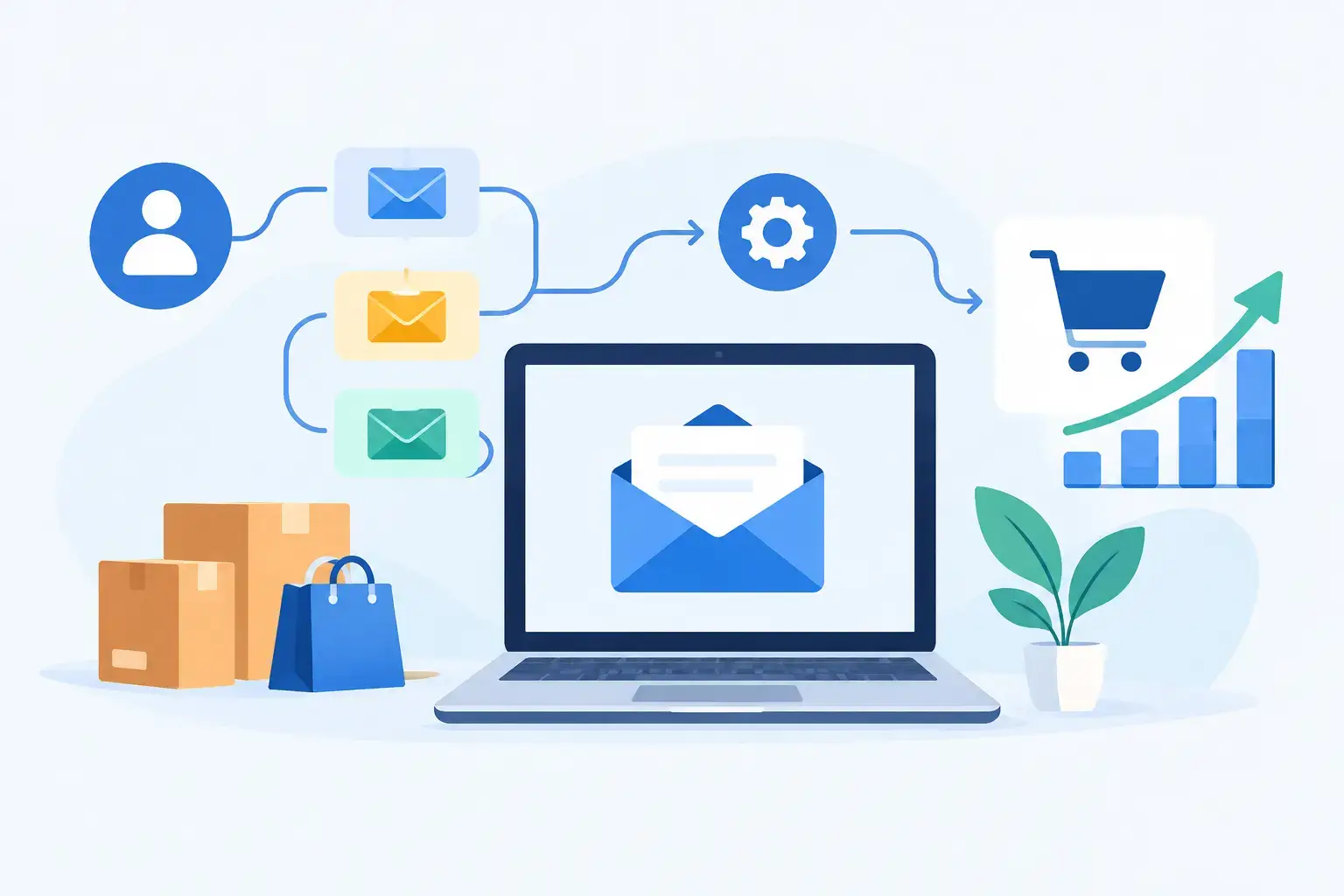
A first-time buyer who never hears from your brand again is not a customer relationship. It is an expensive transaction. Email marketing automation for ecommerce gives growing businesses a practical way to turn customer behavior – browsing, buying, replenishing, and disengaging – into timely communication that moves revenue without adding manual work to the marketing team.
For founders and ecommerce leaders, the goal is not to send more emails. It is to build a connected retention system that delivers useful messages at the moments customers are most likely to act. Done well, automation improves repeat purchase rates, reduces abandoned-cart loss, supports customer service, and gives marketing teams clearer data for smarter decisions.
Why Email Marketing Automation for Ecommerce Matters
Paid acquisition can create momentum, but its costs can rise quickly. When every sale depends on another ad click, growth becomes harder to predict. Automated email programs help businesses earn more value from customers they have already paid to acquire.
The opportunity is especially strong because ecommerce stores generate valuable signals every day. A customer views a product category, adds an item to a cart, completes an order, uses a discount code, or goes quiet for 90 days. Each action can trigger a relevant next step. The difference between a generic weekly promotion and a behavior-based message is relevance.
That relevance has to be earned. Customers are comfortable with emails that confirm an order, explain how to use a product, remind them about an item they considered, or offer a well-timed replenishment option. They are less receptive to a constant stream of discounts that ignores their needs. Automation should protect brand value, not train buyers to wait for the next coupon.
Build the Data Foundation Before the Flows
Automation is only as reliable as the data behind it. Before mapping campaigns, connect the ecommerce platform, email platform, customer relationship system, payment tools, loyalty program, and support software where relevant. The objective is a dependable view of what customers have done and what they are likely to need next.
At minimum, your team should be able to identify purchase history, products viewed, cart activity, order value, location, customer status, and email engagement. More mature programs may also use product margins, subscription status, returns, support tickets, loyalty points, or inventory availability.
This is where technical architecture matters. A broken event, duplicate customer profile, or delayed order status can send an irrelevant message at exactly the wrong time. For example, a customer should never receive a cart reminder after completing a purchase, and a replenishment email should not promote an item that is unavailable. Custom API integrations and quality assurance processes may be necessary when an off-the-shelf connection cannot accurately reflect the business workflow.
Consent and deliverability also belong in the foundation. Collect permission clearly, honor preferences, suppress unsubscribed contacts immediately, and authenticate sending domains. Strong creative cannot overcome a damaged sender reputation. It depends on your audience and transaction volume, but a smaller engaged list is usually more valuable than a large list that rarely interacts.
Start With the Automations That Affect Revenue
Most ecommerce businesses do not need 20 complicated workflows on day one. They need a few dependable flows that cover high-intent moments, then a process for testing and improving them.
Welcome new subscribers with a useful first conversation
A welcome series is often the first automated experience a prospective customer receives. Rather than leading with a discount alone, introduce the reason to choose your brand: the product problem it solves, quality standards, bestsellers, customer proof, or a short founder story.
If an incentive supports your margins and acquisition strategy, include it with a clear expiration date. For premium brands, education and confidence may outperform a steep offer. The best approach depends on purchase frequency, average order value, competitive pressure, and how much differentiation your product has.
Recover carts without creating friction
Cart abandonment does not always mean rejection. Customers may be comparing options, checking shipping costs, waiting for a paycheck, or simply getting distracted. A short cart recovery sequence can remind them of the product, answer common objections, and make checkout easy to resume.
The first message should usually arrive while intent is still fresh. Follow-up messages can add social proof, delivery information, product benefits, or a modest incentive if the economics justify it. Avoid sending every customer the same discount immediately. That can weaken margins and encourage intentional abandonment.
Make post-purchase communication part of the product experience
The order confirmation and shipping emails are functional, but they are also high-attention moments. Extend the experience with a post-purchase sequence that helps customers get value from what they bought. This may include setup guidance, care instructions, product education, complementary recommendations, or a request for a review after enough time has passed.
For products with a natural usage cycle, replenishment automation can be one of the most effective retention flows. A skincare product, coffee subscription alternative, pet supply, or supplement should not be treated like a one-time purchase. Timing should reflect actual consumption patterns, not a generic 30-day rule.
Win back customers before they disappear
A customer who has not purchased in several months may need a reminder, but they may also have changed preferences or stopped finding your messages relevant. A win-back sequence should acknowledge the gap and offer a reason to reconnect, such as new products, useful content, an updated loyalty benefit, or a preference update.
If customers remain inactive, reduce send frequency or suppress them. This protects deliverability and keeps performance reporting honest. Not every contact is worth pursuing indefinitely.
Segment for Context, Not Complexity
Segmentation should make messages more relevant, not make reporting impossible. Start with segments that represent meaningful business differences: first-time customers, repeat buyers, high-value customers, subscribers who have not purchased, customers by product category, and customers approaching a predicted replenishment window.
As the program matures, use behavioral and commercial data together. A customer who bought once at a discount should not automatically receive the same treatment as a loyal customer with a high lifetime value. Likewise, someone who repeatedly browses a product line may be a stronger candidate for category-specific education than for broad promotional emails.
Personalization goes beyond inserting a first name. It means selecting the message, product, timing, and offer based on known context. That requires clean data rules, deliberate customer journey design, and ongoing monitoring. A personalized message that references an outdated purchase or irrelevant category can feel less credible than a well-written general campaign.
Measure Business Outcomes, Not Just Opens
Open rates have become less dependable because privacy features can distort the data. Use them as directional signals, not proof of success. Focus on conversion rate, revenue per recipient, revenue generated by each flow, repeat purchase rate, average order value, unsubscribe rate, spam complaints, and customer lifetime value.
Attribution requires judgment. An email may not be the only reason someone bought, especially when customers interact with paid search, social media, SMS, and direct traffic. Still, consistent measurement reveals whether an automation is contributing to profitable behavior over time.
Run controlled tests with a purpose. Test one meaningful variable at a time, such as the offer, subject line, send delay, product recommendation logic, or message order. Large changes across every part of a workflow make it difficult to learn what actually improved performance. For high-volume stores, holdout groups can show the incremental impact of an automation more clearly than attributed revenue alone.
Treat Automation as a Connected Growth System
Email does not operate in isolation. A customer who receives a support ticket response, browses a product on mobile, abandons a cart, and later receives a paid retargeting ad is experiencing one brand, not separate departments. The strongest ecommerce programs coordinate data and messaging across those touchpoints.
That coordination may require more than a marketing platform configuration. It can involve custom event tracking, inventory logic, CRM architecture, customer-data governance, and integration work that supports accurate decisions at scale. SolidAppMaker helps businesses connect automation strategy with the secure, scalable systems needed to support it.
Start with one customer journey where better timing would clearly improve the experience. Build it carefully, validate every trigger, and measure what changes. A reliable automation that customers appreciate is a stronger growth asset than a large collection of workflows nobody trusts.