
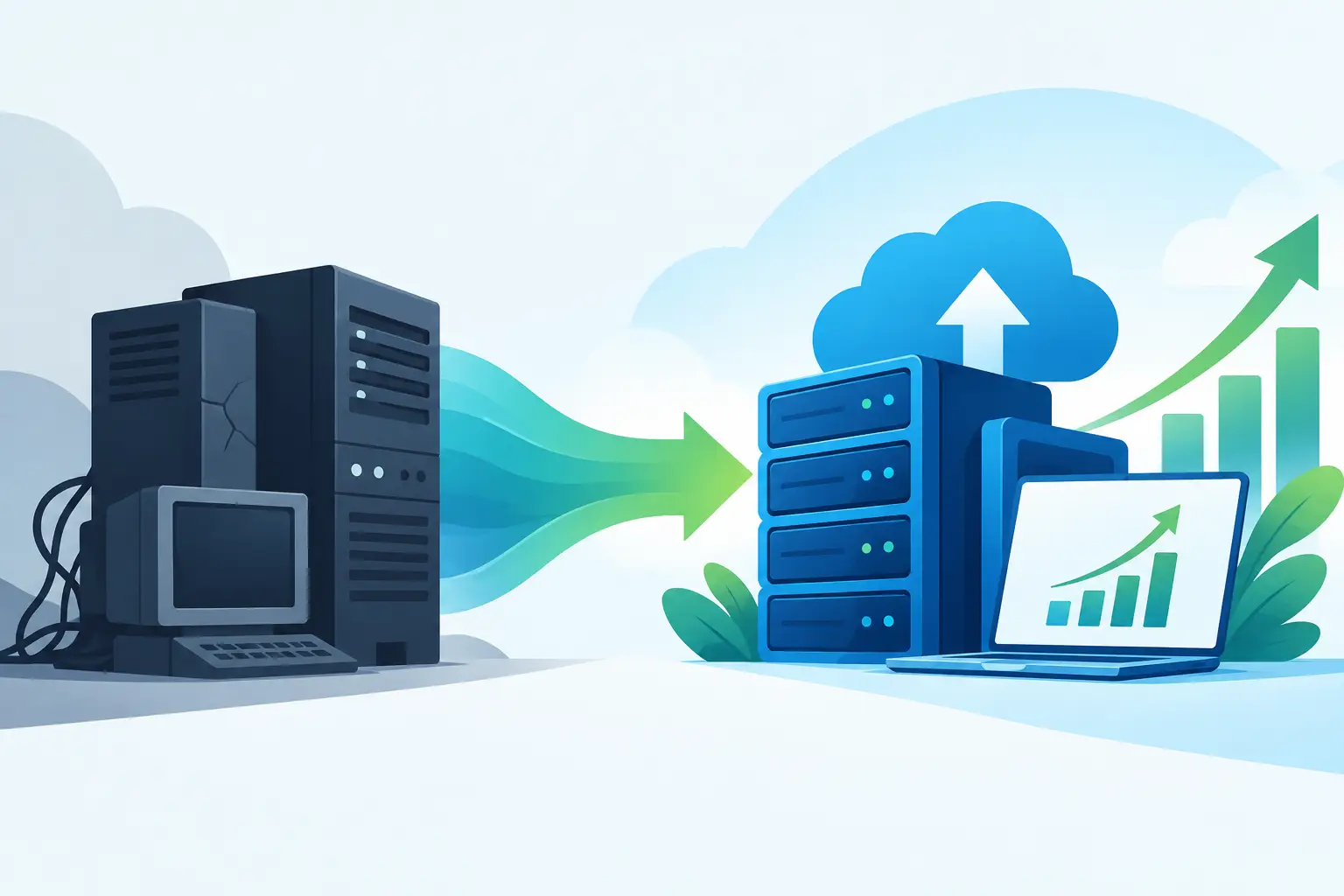
A platform does not have to crash to become a business problem. It may still process orders, store customer records, or run a core internal workflow, yet require manual workarounds, prevent new integrations, and make every change feel risky. Legacy platform transformation addresses that gap by turning a limiting system into a secure, scalable foundation for the next stage of growth.
For leaders, this is not primarily a code replacement project. It is a business decision about speed, operating cost, customer experience, and the ability to act on new opportunities. The right transformation plan preserves what still creates value while removing the architectural constraints that slow the organization down.
Why Legacy Platforms Become a Growth Constraint
Most legacy systems were built to solve a real problem. They may have supported the company through its earliest growth, helped standardize operations, or enabled a team to serve customers when off-the-shelf software could not. The issue is rarely age alone. A ten-year-old platform with clear documentation, stable infrastructure, and useful integrations may be less urgent than a three-year-old system built around fragile shortcuts.
The warning signs usually appear in the work surrounding the platform. Employees export spreadsheets because data cannot move between systems. Customer support cannot see a complete account history. Developers avoid routine changes because one fix can create unexpected issues elsewhere. Security updates, mobile access, analytics, or AI-enabled automation become expensive projects rather than practical improvements.
These limitations create compounding costs. Manual processes consume staff time, disconnected data reduces decision quality, and slow releases let competitors respond faster. Eventually, the business starts adapting its goals to the limitations of its technology. That is the point where modernization should become an executive priority.
Legacy Platform Transformation Is Not Always a Full Rewrite
A full rewrite can be the right answer, but it is not the default answer. Rebuilding every function at once can extend timelines, increase risk, and force teams to recreate features that users depend on every day. A better approach begins with an honest assessment of business value, technical risk, and operational dependencies.
In some cases, the strongest move is to modernize the user experience and API layer while retaining a stable core system. In others, an organization may extract a high-value workflow, such as customer onboarding, inventory visibility, or claims processing, into a new service first. This approach reduces pressure on the old platform while creating measurable gains early.
Replacement becomes more compelling when the platform cannot meet security requirements, cannot scale reliably, depends on unsupported technology, or makes essential integrations impractical. Even then, transformation should be phased around business priorities. The goal is not to build a newer version of every screen. The goal is to create a platform that supports better operations and future product decisions.
Start With Business Outcomes, Not a Technology List
It is easy for a modernization initiative to become a debate about programming languages, cloud providers, or frameworks. Those decisions matter, but they should follow the business case. Leadership should first define what must improve and how success will be measured.
For one company, the central objective may be reducing order-processing time from days to hours. For another, it may be giving field teams mobile access to real-time account information. A growing business may need an integration architecture that connects its CRM, e-commerce tools, accounting system, and support platform without repeated manual exports.
Clear outcomes create practical priorities. They also prevent scope from expanding simply because a new platform makes additional features possible. A transformation roadmap should distinguish between requirements needed for a safe launch, capabilities that create near-term value, and improvements that can wait until the new foundation is proven.
Map the Work That Actually Happens
Process maps are often more revealing than system diagrams. Talk to the people who enter data, resolve exceptions, serve customers, approve transactions, and prepare reports. Ask where they rekey information, where approvals stall, and which workarounds they use to complete their jobs.
These details identify the highest-value opportunities for workflow automation and integration. They also reveal the knowledge that lives only with long-tenured employees. If that knowledge is not captured before changes begin, a technically successful launch can still disrupt daily operations.
Establish a Baseline Before Building
Measure the current state before selecting solutions. Useful baselines include release frequency, system response times, support ticket volume, error rates, time spent on manual reconciliation, conversion rates, and cost per transaction. Not every metric will apply, but each chosen metric should connect to a business objective.
A baseline gives stakeholders a shared definition of progress. It also helps teams make smart trade-offs when budgets or timelines require phased delivery.
Build an Architecture That Can Grow With the Business
A modern platform should make change safer, not merely make the interface look newer. That requires an architecture designed around clear boundaries, secure data handling, reliable integrations, and maintainable deployment practices.
For many organizations, that means creating APIs that allow approved systems to exchange data consistently. It can mean separating high-change functions from stable back-office processes, adding centralized identity and access controls, and moving workloads to infrastructure that can scale with demand. It may also include a mobile application for employees or customers when the business needs access beyond a desktop environment.
AI can add value, but only when it solves a defined operational problem. Conversational AI can assist support teams with accurate answers drawn from approved knowledge. AI-powered workflow automation can classify incoming requests, route documents, summarize cases, or flag exceptions for human review. It should be introduced with data governance, clear approval paths, and performance monitoring, not as a decorative feature.
Security belongs in the architecture from the first planning session. Role-based access, encryption, audit trails, backup and recovery processes, testing, and monitoring should be treated as delivery requirements. A platform that moves faster but exposes customer data or creates compliance risk has not delivered business value.
Reduce Risk With a Phased Delivery Plan
Large transformation programs fail when they ask the organization to absorb too much change at once. A staged plan gives leadership checkpoints, lets users validate new workflows, and limits the impact of defects.
A practical delivery process starts with discovery and technical assessment. The team reviews the existing platform, data quality, integrations, user roles, security needs, and operational bottlenecks. From there, product strategy, UX/UI design, architecture, development, quality assurance, deployment, and post-launch maintenance move forward in defined stages.
Data migration deserves special attention. Historical data may be incomplete, duplicated, or structured differently than the new system requires. Teams should decide what data must move, what can be archived, and what should be cleaned before migration. Test migrations and reconciliation checks are essential because a polished interface cannot compensate for unreliable records.
Parallel operations may be appropriate for systems that support financial transactions, healthcare processes, or other high-impact workflows. Running old and new capabilities together for a limited period adds complexity, but it can provide confidence before a complete cutover. For less critical functions, a controlled release to a pilot group may offer a faster route to feedback.
Treat Change Management as Product Work
The people who use the platform determine whether its benefits become real. If a new workflow adds friction, training is unclear, or managers cannot explain why the change matters, adoption will stall. This is why user involvement should continue after initial requirements are gathered.
Bring representative users into prototype reviews and testing sessions. Give them realistic scenarios rather than asking whether they like a design in theory. Their feedback can expose missing permissions, confusing terminology, and edge cases that would otherwise appear after launch.
Training should match roles and daily tasks. A finance administrator, field technician, customer support agent, and executive reviewer do not need the same instruction. Clear release communications, short role-based guides, and an accessible support path help teams transition with less disruption.
Choose a Partner That Owns the Long-Term Outcome
Legacy platform transformation requires more than development capacity. It requires a partner that can connect commercial goals to product strategy, architecture, design, delivery, and ongoing support. Transparent communication matters because transformation decisions involve trade-offs that leadership needs to understand before they affect budget or timelines.
SolidAppMaker approaches this work as a long-term technology partnership, helping clients evaluate legacy systems, prioritize the highest-value improvements, and build platforms that support growth after launch. The strongest engagement model does not end at deployment. It includes monitoring, maintenance, optimization, and a plan for the next meaningful improvement.
The best next step is not to declare war on every old system. Identify the workflow where technology is costing the business the most time, visibility, or revenue. When that problem is clearly defined, the path to a more capable platform becomes far more manageable.