
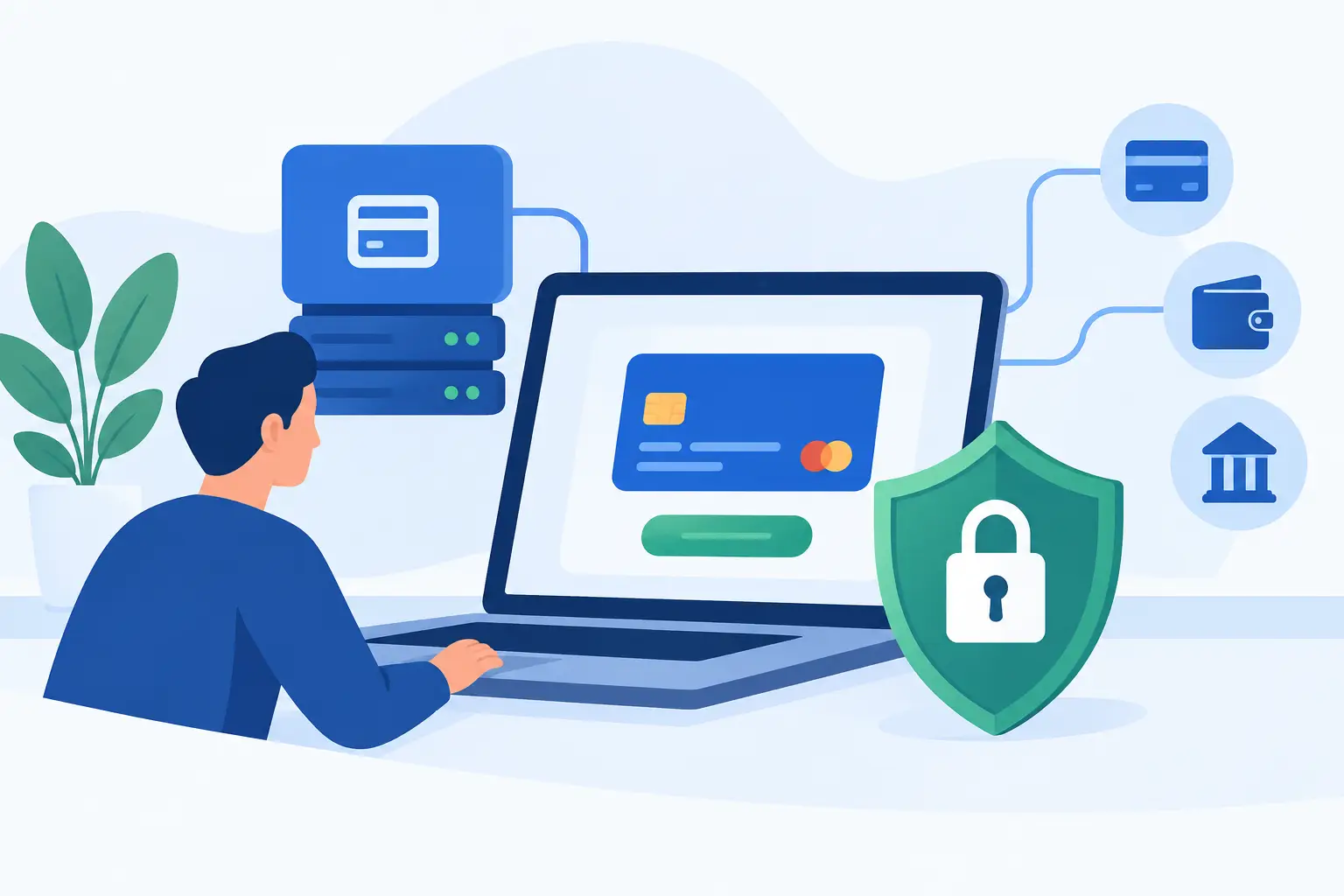
A payment failure is not just a technical error. It is an abandoned cart, a delayed invoice, a support ticket, and sometimes a customer who never returns. Learning how to integrate payment gateways correctly means designing a checkout experience that protects revenue while giving your business room to grow.
For a startup, that may mean accepting cards and digital wallets quickly enough to validate an MVP. For an established business, it may mean connecting payments to an ERP, subscription platform, marketplace, mobile app, or custom customer portal. The code matters, but the business rules behind the code matter just as much.
Start With the Payment Experience You Need
A payment gateway is the technology layer that securely sends payment details from your website or application to a payment processor or acquiring bank for authorization. The processor, merchant account, card networks, and issuing banks each have different roles. In practice, businesses often use the term “gateway” to describe the full service used to accept and manage payments.
Before choosing a provider or writing an integration plan, define what a successful payment flow looks like for your customers and operations team. A simple ecommerce site may only need one-time card payments, refunds, and order confirmations. A service business may need deposits, recurring invoices, saved payment methods, and automated reminders. A marketplace may need to collect funds from buyers, deduct fees, and pay multiple sellers.
The right architecture depends on these requirements. Adding a gateway built for basic online transactions can become expensive and difficult if your model later requires subscriptions, split payments, international currencies, or in-person transactions.
Questions That Shape the Architecture
Get clear on where customers will pay: a web checkout, native mobile app, invoice page, point-of-sale system, or all of the above. Then identify which payment methods they expect, such as major cards, ACH bank transfers, Apple Pay, Google Pay, PayPal, buy now, pay later options, or local methods for international markets.
Also decide how payments should connect to the rest of your business. Your accounting system, CRM, order management platform, inventory records, membership database, and customer support tools should not depend on someone manually copying transaction details every day. Custom API integrations can turn payment events into useful operational data.
Choose a Provider Based on Business Fit, Not Name Recognition
Payment providers can look similar during early research. Most offer APIs, hosted checkout pages, fraud tools, dashboards, and recurring billing capabilities. The differences become clearer when you examine pricing, payout timing, integration flexibility, geographic availability, support, dispute management, and compatibility with your business model.
A hosted checkout can reduce development time and keep sensitive card data off your servers. This is often a practical choice for an MVP or a straightforward online store. An embedded checkout offers more brand control, but it demands closer attention to security, browser behavior, accessibility, and compliance scope.
For a growing company, avoid selecting a provider based only on transaction fees. A slightly lower rate may not offset limitations around subscriptions, account verification, reporting, payouts, or support. If your product involves high-value orders, regulated products, multiple vendors, or cross-border payments, confirm that the provider supports those use cases before development begins.
How to Integrate Payment Gateways Securely
A secure integration begins with a clear separation between the customer-facing application and your server-side payment logic. The browser or mobile app should collect payment details through approved provider components, such as hosted fields or tokenization tools. Your application receives a payment token rather than handling raw card numbers directly.
Your backend then creates or confirms the transaction using secret credentials stored in a secure environment. Never place private API keys inside frontend code, mobile application bundles, public repositories, or email threads. Limit access to production credentials and rotate keys when team membership or system exposure changes.
Payment Card Industry Data Security Standard, or PCI DSS, responsibilities vary based on your integration method. Redirecting customers to a provider-hosted page generally reduces your compliance burden. Building a fully custom card-entry experience increases control but can increase the systems and processes that must be assessed. Compliance is not a checkbox added at launch. It should influence the product design from the beginning.
Use Webhooks as the Source of Truth
One common mistake is treating a “payment successful” message in the browser as final confirmation. A customer can close a tab, lose connectivity, or encounter a delayed bank response. The reliable source of payment status is the provider’s server-to-server webhook event.
Your application should verify webhook signatures, record each event, and process events idempotently. Idempotency means a duplicate event does not create a second order, duplicate subscription, or repeated email. This detail protects both revenue reporting and customer trust.
Your system should also account for payment states beyond success and failure. A payment can require customer authentication, be pending, later be refunded, become disputed, or fail after an attempted renewal. Define what each state means for order fulfillment, account access, inventory allocation, and customer communication.
Build Checkout for Confidence and Conversion
Security and conversion are connected. Customers are more likely to complete a transaction when the checkout clearly shows what they are buying, what it costs, and what happens next. Surprise fees, confusing error messages, forced account creation, and slow pages create hesitation at the exact moment a customer should feel confident.
Keep the path to payment focused. Request only information needed to complete the transaction, calculate taxes and shipping early when possible, and make error messages actionable. If a card is declined, do not expose sensitive processor details, but give the customer a useful next step such as trying another payment method or contacting their bank.
Mobile testing deserves particular attention. Many customers will pay from a phone with an autofill wallet, limited network connection, and little patience for forms. Buttons must remain visible, payment fields must work with mobile keyboards, and authentication challenges must return the customer to the correct order state.
Accessibility is also a commercial requirement. Checkout forms should support keyboard navigation, clear labels, readable contrast, and assistive technologies. An inaccessible payment step prevents some customers from purchasing and creates unnecessary legal and reputational risk.
Connect Payments to Your Core Systems
The transaction itself is only one event in a larger workflow. When a payment clears, the right data should reach the systems that need it: an order record may move to fulfillment, an invoice may update in accounting, a sales contact may be notified in the CRM, and a customer may receive a receipt with support details.
This is where a custom integration creates long-term value. Rather than relying on disconnected dashboards, teams can build a dependable flow of information across operations. For example, a B2B platform might create a paid invoice, provision the customer’s account, notify the implementation team, and schedule a renewal reminder from one verified payment event.
Be deliberate about what data is stored. Keep the payment provider as the authority for sensitive payment details. Your own system may retain customer IDs, transaction IDs, status, amount, currency, and business-specific metadata. This approach reduces exposure while preserving the reporting data your team needs.
Test the Failure Paths Before Customers Find Them
A payment integration is not ready because a test card completed one successful transaction. It needs structured testing across expected and unexpected paths. Test declines, expired cards, payment authentication, duplicate clicks, network interruptions, refund requests, webhook retries, subscription failures, and partial system outages.
Your team should confirm that every scenario produces the correct customer message and internal record. If an order is paid but an email service is temporarily unavailable, can the receipt be sent later without charging again? If a webhook arrives twice, does the system recognize it? If a refund is issued from the provider dashboard, does your internal order status update correctly?
Use separate development, staging, and production environments. Test with provider sandbox tools, then complete controlled real-world transactions before a major launch. Monitor payment failures after release, not just successful revenue. A sudden rise in failures may point to a browser issue, a provider configuration change, fraud-rule conflict, or a code deployment that needs immediate attention.
Plan for Ongoing Ownership
Payment gateways require maintenance because providers update APIs, payment rules evolve, fraud patterns change, and customer expectations expand. Assign clear ownership for monitoring transactions, resolving disputes, reviewing failed payments, managing credentials, and testing updates.
For businesses without a full internal engineering team, a long-term technology partner can provide that continuity. SolidAppMaker approaches payment integrations as part of the complete product lifecycle: requirements, architecture, development, security testing, launch support, and post-launch optimization. That model helps payment infrastructure keep pace with the business instead of becoming a hidden constraint.
The best next step is to map one real customer purchase from the first click through payment confirmation, fulfillment, refund, and reporting. Wherever the process becomes unclear, manual, or difficult to verify, you have found the work that will make your payment experience stronger.