
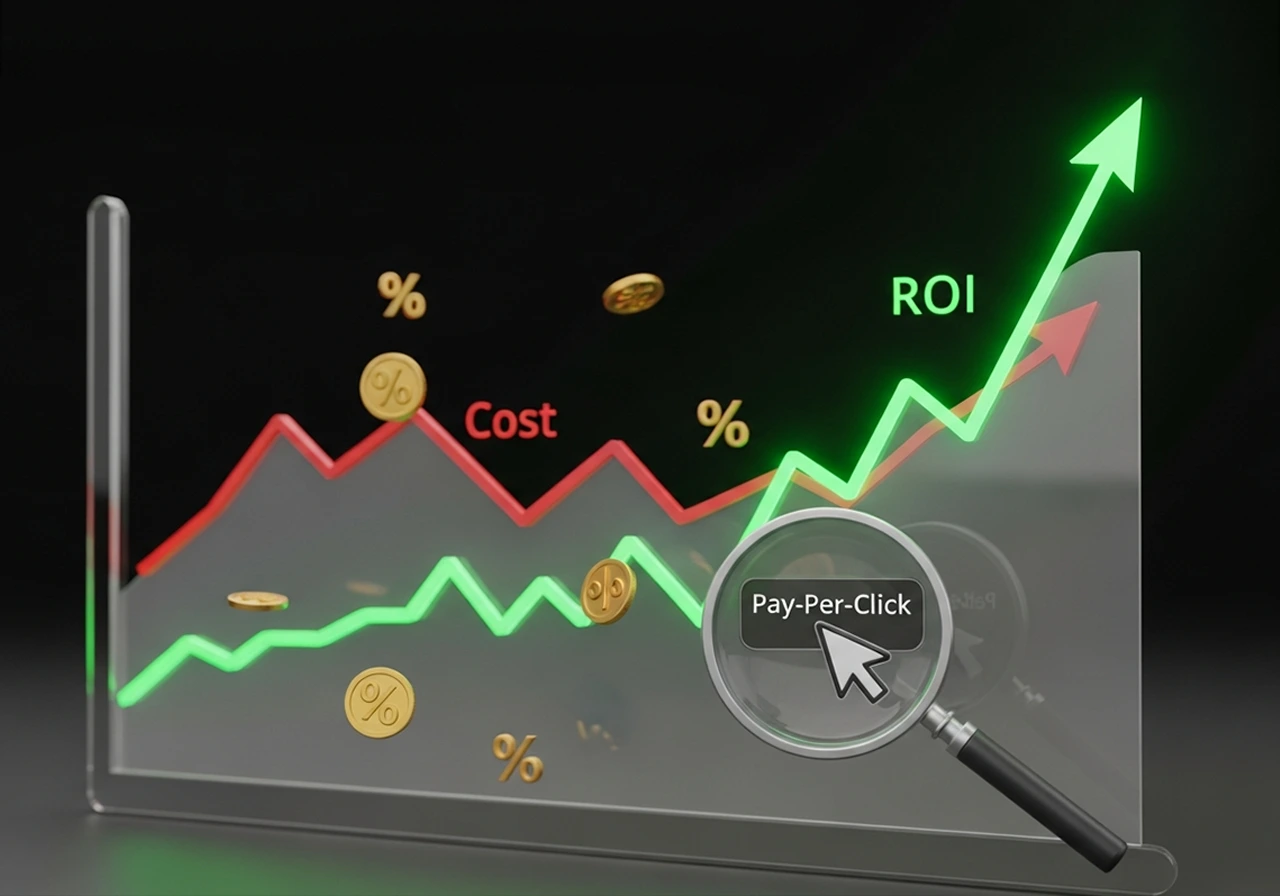
Understanding return on investment across your digital marketing efforts isn’t just about proving marketing’s value—it’s about making informed decisions that maximize growth while minimizing wasted spend. When you track ROI accurately across mobile apps, websites, and paid advertising campaigns, you gain the insights needed to double down on what works and eliminate what doesn’t. Yet many businesses struggle with fragmented data, inconsistent attribution, and incomplete visibility into the customer journey. Let’s explore the comprehensive framework, essential tools, and proven best practices that transform scattered data into actionable ROI insights.
Establishing Your ROI Tracking Foundation
Before diving into specific tools and tactics, you need a solid conceptual framework for what ROI tracking actually means in the context of modern digital marketing. ROI fundamentally measures the revenue generated by your marketing investments relative to their costs. The basic formula—(Revenue – Cost) / Cost—seems simple, but complexity emerges when tracking customers across multiple touchpoints, channels, and devices throughout journeys that might span days, weeks, or months.
Defining what constitutes a conversion represents your first critical decision. Different business models require different conversion definitions. E-commerce businesses track purchases directly, while B2B companies might track form submissions, demo requests, or qualified leads. SaaS businesses often focus on trial signups and eventual paid conversions. Service businesses track appointment bookings or consultation requests. Clearly defining your primary conversion events and assigning appropriate values ensures consistent measurement across channels.
Customer lifetime value (CLV) transforms ROI calculation from short-term transaction analysis to long-term relationship economics. Acquiring a customer who makes one $50 purchase looks different from acquiring one who generates $500 in revenue over two years. Incorporating CLV into ROI calculations, especially for subscription businesses or industries with high repeat purchase rates, provides more accurate pictures of marketing effectiveness and justifies higher acceptable customer acquisition costs.
Multi-channel attribution acknowledges that customers rarely convert from a single touchpoint. They might discover your brand through social media, research on your website, compare options via Google search, and eventually convert through direct navigation. Understanding how different channels work together—and distributing conversion credit appropriately—prevents you from over-investing in last-click channels while starving awareness channels that initiate customer journeys.
Website Analytics: The Central Hub
Google Analytics 4 (GA4) serves as the foundation for most website ROI tracking, offering comprehensive visitor behavior data, conversion tracking, and integration with advertising platforms. GA4’s event-based model tracks user interactions flexibly, allowing you to measure virtually any action users take on your site. Set up conversion events for all valuable actions: purchases, form submissions, phone clicks, video views, downloads, or any behavior indicating progress toward becoming a customer.
Enhanced e-commerce tracking provides detailed revenue attribution when properly implemented. It tracks product impressions, clicks, cart additions, checkout steps, and purchases, connecting revenue directly to traffic sources and campaigns. This granular data reveals which marketing channels drive not just traffic but actual revenue, and whether customers from different sources have different average order values or purchase behaviors.
Goals and conversion funnels visualize the path users take toward conversion, identifying where prospects drop off. If 1,000 people visit your pricing page but only 100 start trials and 20 become paid customers, you can calculate conversion rates at each stage and identify the biggest opportunities for improvement. Funnel analysis often reveals that improving conversion rates at key friction points delivers better ROI than simply driving more top-of-funnel traffic.
UTM parameters standardize campaign tracking across all marketing channels. These URL parameters (utm_source, utm_medium, utm_campaign, utm_content, utm_term) tag links so analytics platforms know exactly which campaign drove each visit. Implement consistent UTM naming conventions across your organization, documenting standards for how you’ll name sources, mediums, and campaigns. This discipline enables accurate cross-channel comparison and prevents data fragmentation from inconsistent tagging.
Custom dimensions and metrics extend GA4’s native capabilities to track business-specific information. Create custom dimensions for customer segments, subscription tiers, or product categories. Build custom metrics calculating values specific to your business model. These customizations transform generic analytics into tailored insights addressing your unique measurement needs.
Mobile App Analytics and Attribution
Mobile app analytics requires specialized tools because standard web analytics can’t track in-app behavior effectively. Firebase Analytics, Google’s mobile app analytics solution, provides comprehensive tracking for both iOS and Android apps. It measures user acquisition sources, in-app behavior, conversion events, retention, and revenue. Firebase integrates seamlessly with Google Ads, enabling closed-loop tracking from ad impression through in-app purchase.
App attribution platforms like AppsFlyer, Adjust, or Branch solve the mobile attribution puzzle by connecting app installs and in-app events back to specific marketing campaigns. These platforms use probabilistic and deterministic matching to attribute installs even when users click ads on one device and install on another. They provide fraud detection, protecting your budget from install fraud and click injection schemes that plague mobile advertising.
Deep linking creates seamless experiences from ads directly into specific app screens, improving conversion rates while enabling precise tracking. When users click ads for specific products, deep links open the app directly to those product pages rather than generic home screens. This contextual continuity reduces friction while providing clear attribution for which campaigns drive which in-app behaviors.
In-app event tracking measures valuable actions users take within your app: completing onboarding, making purchases, reaching specific levels, sharing content, or subscribing. Define events matching your business model and track them consistently. E-commerce apps track purchases and average order values, gaming apps track progression milestones and in-app purchases, productivity apps track feature usage and upgrade conversions.
Cohort analysis groups users by acquisition date or source, then tracks their behavior over time. You can compare retention, revenue, or engagement across cohorts to identify which acquisition channels deliver the most valuable long-term users. A channel with high initial acquisition costs might deliver superior CLV through better user retention, justifying the investment when you examine cohort data.
PPC Campaign Tracking and Conversion Measurement
Google Ads conversion tracking connects ad clicks to valuable actions on your website or app. Implement the Google Ads conversion tag on conversion confirmation pages, or use Google Tag Manager for more flexible implementation. Import GA4 conversions into Google Ads to leverage your existing measurement infrastructure. Accurate conversion tracking enables smart bidding strategies that optimize automatically toward your business objectives.
Conversion values allow Google Ads to optimize for revenue rather than just conversion volume. Assign transaction-specific values for e-commerce, average values for leads based on historical close rates, or different values for different conversion types. This value-based optimization ensures algorithms prioritize high-value conversions over low-value ones, improving overall ROI.
Offline conversion tracking bridges the gap between online clicks and offline purchases or conversions. If your sales team closes deals via phone or in-person meetings after initial online lead generation, import these offline conversions back into Google Ads using customer email addresses or phone numbers as matching keys. This creates complete visibility into how digital campaigns drive offline revenue.
Call tracking solutions like CallRail or DialogTech attribute phone calls to specific marketing campaigns using dynamic number insertion. When visitors from different campaigns call, they see different tracking numbers that identify their source. Call recordings, transcripts, and outcome tracking provide qualitative insights into which campaigns generate not just calls but qualified conversations leading to sales.
Meta Ads conversion tracking relies on the Meta Pixel, a JavaScript code snippet tracking website visitor behavior. The Pixel fires events for page views, add to carts, purchases, and custom conversions you define. iOS privacy changes have limited Pixel effectiveness, making the Conversions API increasingly important. The Conversions API sends conversion data directly from your server to Meta, bypassing browser-based tracking limitations.
Cross-Platform Attribution and Customer Journey Tracking
Attribution modeling determines how conversion credit distributes across multiple touchpoints. Last-click attribution assigns all credit to the final interaction before conversion—simple but often misleading. First-click attribution credits initial discovery. Linear attribution distributes credit equally across all touchpoints. Time-decay attribution gives more credit to recent interactions. Data-driven attribution uses machine learning to assign credit based on actual impact.
Multi-touch attribution platforms like Ruler Analytics, Dreamdata, or HockeyStack track customers across websites, apps, and campaigns, connecting all touchpoints into unified customer journeys. These platforms integrate with your CRM, marketing automation, analytics, and advertising platforms, providing holistic views of how customers progress from anonymous visitors through leads to customers. This comprehensive tracking reveals which channel combinations drive best results.
CRM integration completes the attribution picture by connecting marketing activities to sales outcomes and customer lifetime value. When you integrate Google Analytics, advertising platforms, and your CRM (Salesforce, HubSpot, Pipedrive), you can track individuals from first website visit through lead status to closed deals and ongoing customer value. This end-to-end visibility enables true ROI calculation including both acquisition costs and lifetime revenue.
Cross-device tracking addresses the reality that customers use multiple devices throughout their journeys. They might discover you on mobile, research on desktop, and purchase on tablet. Google Analytics 4 uses Google Signals and user ID tracking to connect behavior across devices when users sign in. This creates more complete customer journey pictures, preventing channel fragmentation from device switching.
Marketing mix modeling takes a statistical approach to attribution, analyzing correlations between marketing spend and business outcomes at an aggregate level rather than tracking individual users. This approach works well for businesses with long sales cycles, significant offline components, or privacy constraints limiting individual tracking. It requires substantial data history and statistical expertise but provides strategic insights into overall channel effectiveness.
Marketing Automation and Lead Tracking
Marketing automation platforms like HubSpot, Marketo, or Pardot track leads from first touch through the entire nurture process. They attribute lead generation to specific campaigns, track engagement with email and content, score leads based on behavior, and connect marketing activities to sales outcomes. This closed-loop tracking enables marketing teams to prove which campaigns generate not just leads but revenue.
Lead scoring quantifies prospect quality based on demographic attributes and behavioral signals. Assign points for job titles, company sizes, industries, website visits, content downloads, email opens, and demo requests. Sales teams can prioritize high-scoring leads while marketing continues nurturing low-scoring ones. Over time, analyze which scores correlate with actual conversions to refine your model.
Email marketing attribution connects email campaign engagement to website behavior and conversions. UTM parameters in email links identify which campaigns and specific messages drive traffic and conversions. Integration between email platforms (Mailchimp, Klaviyo, ActiveCampaign) and analytics reveals the revenue contribution from email marketing, often undervalued in last-click attribution models.
Content attribution identifies which blog posts, guides, videos, or resources contribute most to customer acquisition. Track content engagement events in GA4, use UTM parameters in content promotion, and analyze assisted conversions for content touchpoints. High-performing content deserves promotion investment and replication, while underperforming content indicates opportunities for improvement or retirement.
E-commerce Specific Tracking
Shopping cart and checkout analytics identify revenue leaks in your purchase funnel. Track cart abandonment rates, analyze where users drop off during checkout, and measure the impact of interventions like abandoned cart emails or streamlined checkout processes. Small improvements in checkout conversion rates often deliver better ROI than increased traffic acquisition.
Product performance analysis reveals which products drive profitability versus volume. Track revenue, profit margins, conversion rates, and average order values by product or category. Some products might have low conversion rates but high margins justifying their promotion, while others drive volume but low profitability. This nuanced analysis optimizes promotional strategy beyond simple revenue maximization.
Promotional code tracking attributes revenue to specific campaigns and partners. Unique promo codes for different campaigns, influencers, or affiliates enable precise ROI calculation for each source. Track not just usage rates but also average order values and customer lifetime values associated with different codes to understand true promotional effectiveness.
Customer retention and repeat purchase tracking extends ROI analysis beyond acquisition. Calculate repeat purchase rates, time between purchases, and customer lifetime value by acquisition channel. Channels driving high repeat rates deliver superior long-term ROI even if initial acquisition costs are higher. This insight prevents you from optimizing solely for low cost-per-acquisition while sacrificing customer quality.
Privacy, Compliance, and First-Party Data
Privacy regulations like GDPR, CCPA, and others require explicit consent for tracking cookies and using personal data. Implement compliant consent management platforms like OneTrust or Cookiebot that obtain and document user consent before tracking. Ensure your tracking practices respect user choices while maintaining measurement capabilities for consenting users.
First-party data collection reduces reliance on third-party cookies increasingly blocked by browsers and privacy regulations. Encourage account creation, gather email addresses through value exchanges like content downloads or newsletters, and use server-side tracking where possible. First-party data that you own and control provides more reliable, privacy-compliant tracking than third-party alternatives.
Cookie-less tracking alternatives prepare for the eventual deprecation of third-party cookies. Server-side Google Tag Manager, the Conversions API for Meta, and first-party data strategies maintain tracking capabilities as browsers restrict cookie-based tracking. While these approaches require more technical implementation, they provide more reliable long-term measurement foundations.
Data governance establishes who has access to analytics data, how it’s used, and how long it’s retained. Document data collection purposes, implement appropriate access controls, and establish retention policies deleting data no longer needed. Good governance protects privacy, ensures compliance, and builds customer trust that supports ongoing tracking consent.
Dashboard and Reporting Best Practices
Centralized dashboards consolidate data from multiple sources into unified views. Tools like Google Data Studio, Tableau, or Power BI connect to analytics platforms, advertising accounts, CRMs, and other data sources, creating comprehensive dashboards showing complete marketing performance. Single-dashboard visibility eliminates the need to jump between multiple platforms to understand performance.
Leading and lagging indicators provide both tactical and strategic insights. Leading indicators like website traffic, lead volume, or trial signups signal future performance and allow quick tactical adjustments. Lagging indicators like revenue, customer acquisition cost, and lifetime value show ultimate results but take longer to materialize. Track both types to maintain balance between short-term optimization and long-term strategy.
Automated reporting saves time while ensuring stakeholders stay informed. Schedule weekly or monthly reports distributing automatically to relevant team members. Customize reports for different audiences—executives need high-level ROI summaries while specialists need granular campaign details. Automation ensures consistent communication without manual effort.
Visualization best practices make data accessible and actionable. Use appropriate chart types for different data—line charts for trends over time, bar charts for comparing categories, pie charts for composition. Avoid cluttered visualizations cramming too much information into single charts. Tell clear stories through logical data sequencing and appropriate context.
Putting It All Together
Effective ROI tracking isn’t about implementing every possible tool—it’s about building an integrated measurement ecosystem appropriate for your business model, complexity, and resources. Start with foundational website analytics and conversion tracking, add mobile app tracking if relevant, implement proper PPC conversion measurement, and progressively add sophisticated attribution, CRM integration, and automation as your needs and capabilities grow.
At SolidAppMaker, we’ve helped businesses transform their measurement from fragmented guesswork into comprehensive ROI clarity. The investment in proper tracking infrastructure pays dividends through better strategic decisions, optimized budget allocation, and the confidence to scale what works while eliminating what doesn’t. Your tracking system should evolve with your business, continuously improving to answer the questions that drive growth while respecting customer privacy and maintaining compliance. Master ROI tracking, and you transform marketing from a cost center into a predictable, scalable growth engine.